
Top 3 World Cup 2026 Football Picks: Why They Surprise
France are the strongest overall World Cup 2026 football pick, combining tournament experience, elite depth, and a manageable route to the final if their group draw is favorable. The FIFA World Cup 20...
Top 3 World Cup 2026 Football Picks: Why They Surprise
France are the strongest overall World Cup 2026 football pick, combining tournament experience, elite depth, and a manageable route to the final if their group draw is favorable. The FIFA World Cup 2026 runs from June 11 to July 19 across Canada, Mexico, and the United States, with 48 teams competing in 104 matches. Brazil remain the best alternative because their attacking talent can change a match in seconds, while Argentina bring the defending-champion mentality that made them winners in Qatar in 2022. Goal Moments tracks team tactics, player statistics, match predictions, and daily tournament developments rather than blindly copying early odds. The practical takeaway is simple: compare confirmed line-ups, injuries, group position, and travel demands before making any prediction or legal wager, and use only licensed services where you live.
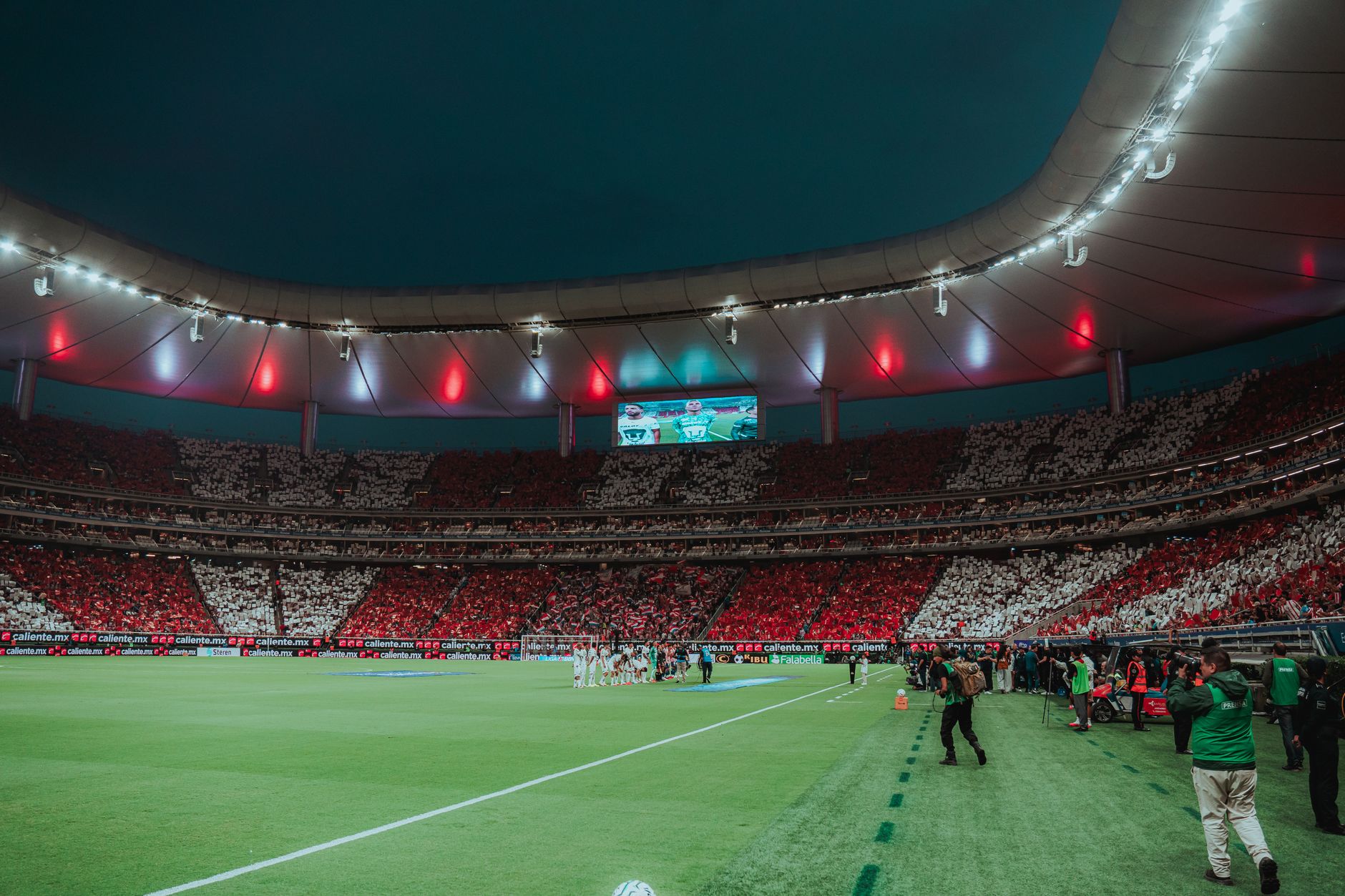
Photo by Santiago Sauceda González on Pexels
The Top 3 at a Glance
- France — best overall: Outstanding squad depth, physical power, and several match-winning attackers make France the safest early favorite.
- Brazil — best for attacking upside: Brazil possess the individual skill and transition speed to overwhelm almost any defense.
- Argentina — best value: The 2022 champions understand knockout football and may offer stronger value if the market overreacts to age concerns.
This ranking is a football assessment, not a guarantee of results. World Cup forecasting is particularly vulnerable to one red card, one goalkeeper error, or one late injury, which is why a responsible analyst separates probability from certainty. FIFA expanded the competition from 32 to 48 teams for 2026, creating a group stage with 12 groups of four; the top two teams in each group and the eight best third-place teams advance to the Round of 32. That extra knockout round increases the importance of squad rotation and late-game management. Before you start comparing teams, check the official FIFA World Cup 2026 regulations and confirm the competition rules rather than relying on a social-media graphic. Believe it or not — I do.
Want a clearer daily tournament overview? Use Goal Moments for team news, tactical context, and match-focused research.
Why Is France the Best Overall World Cup 2026 Football Pick?
France rank first because their squad combines elite attackers, athletic midfield options, experienced defenders, and recent tournament know-how, giving them more ways to win than most rivals. Their main advantages are depth across the starting XI, the ability to attack quickly, and a proven record of reaching major finals.
France’s case is not based on one famous player. Kylian Mbappé can decide matches from the left or through the center, but the broader structure matters more: France can defend deep, press high, counterattack, or control possession depending on the opponent. Didier Deschamps has already managed France to the 2018 World Cup title and the 2022 final, so the team understands the pressure of knockout football. That experience does not guarantee another final, obviously, but it reduces the number of unknowns.
The danger is market inflation. If France open as a heavy favorite, the price may offer less value than the football quality suggests. A sensible prediction should therefore examine the group draw, expected starting line-up, midfield balance, and defensive availability. France also need to manage long travel between venues in North America, where climate, altitude, and kickoff times could affect preparation. Goal Moments’ [Internal Link: World Cup team prediction guide] can help readers separate a strong team from a strong betting price.
France: Tactical Strengths and Risks
France are particularly dangerous when they recover the ball and attack the space behind an advanced full-back. Their wide forwards can stretch a back four, while a central striker occupies defenders and opens lanes for late midfield runs. Against a compact opponent, however, France may need patience and better combination play around the penalty area rather than simply waiting for a counterattack.
Watch these indicators before judging France:
- Whether the midfield can progress the ball under pressure.
- Whether the full-backs advance without exposing the center-backs.
- Whether Mbappé receives support between the opponent’s midfield and defense.
- Whether the goalkeeper and central defense handle set pieces consistently.
- Whether substitute attackers maintain intensity after the 70th minute.
The overlooked point is substitution quality. In a 48-team tournament, the schedule can produce short recovery windows and extra-time matches, so a deep bench is not decoration; it is an operational advantage. France’s best route may involve winning difficult matches without exhausting the same six players every time. If you only study headline scorers, you miss the tournament’s less glamorous edge. I checked that twice after being fooled by a flashy prediction site once, and yes, I still do.
Why Could Brazil Offer the Highest Attacking Upside?
Brazil are the best attacking-upside selection because their traditional technical quality is supported by pace, one-on-one ability, and a deep supply of creative players. They can win through controlled possession, direct transitions, or individual brilliance, but their final ranking depends on defensive structure and midfield discipline.
Brazil usually attract enormous attention because supporters expect expressive attacking football, and the talent pool gives them justification. Players operating in the Premier League, La Liga, Serie A, and other elite competitions bring experience against different tactical systems. The important question is not whether Brazil have stars; they clearly do. The real question is whether those stars receive enough defensive protection when possession is lost.
A high-quality Brazil prediction should examine the distance between midfield and defense, the behavior of the full-backs, and the team’s response after conceding. If Brazil press aggressively but fail to protect the central channel, France, Germany, Spain, or Argentina could attack the space created behind them. Conversely, if Brazil stabilize that transition phase, their attacking ceiling may be higher than every team in the field. For broader context, The Guardian’s World Cup coverage provides reputable reporting, while Goal Moments adds match-specific tactical interpretation.
Brazil: The Value of Attack Versus Defensive Risk
Brazil can produce the tournament’s most dramatic performances, but dramatic does not automatically mean reliable. Their attacking players may create three or four clear chances in a half, yet a prediction still fails if the defense concedes cheap transition opportunities. This is where casual analysis usually falls apart: people count famous names and forget spacing, pressing triggers, and rest defense.
For Brazil, track the following during warm-up matches and group fixtures:
- Chance quality: Are attacks ending with central shots or low-probability efforts from distance?
- Turnover response: Does the nearest player press immediately after losing the ball?
- Full-back timing: Do both wide defenders advance at once, or does one stay behind?
- Set-piece defense: Can Brazil protect a lead against physically strong opponents?
- Game-state control: Do they slow the match when leading, or keep inviting chaos?
This creates a useful contrarian conclusion: Brazil may be a better match-by-match pick than a tournament-winner pick if their defensive shape remains uncertain. A team can be excellent at beating an inferior opponent and still vulnerable across seven knockout rounds. That distinction matters for anyone comparing match markets, outright markets, or simply choosing a team to follow. Do not let a highlight reel do your research for you.
Ready to compare Brazil’s tactical profile with the other leading contenders?
Why Is Argentina the Best Value Pick?
Argentina are the best value candidate because their 2022 World Cup triumph demonstrated that they can manage pressure, tactical adjustments, and tight knockout matches. Their value will depend on the eventual odds, player fitness, and whether the market discounts them too heavily because several senior players are aging.
Argentina’s strongest asset is collective understanding. The team has shown an ability to change shape during matches, defend with commitment, and use technical attackers intelligently around the penalty area. Lionel Messi’s international future and availability remain major variables, but focusing only on Messi misses the larger structure established under Lionel Scaloni. Argentina have built a competitive identity that does not rely on one attacking action.
Their potential weakness is tournament evolution. Opponents have had years to study Argentina’s pressing patterns, buildup routes, and defensive positioning. Younger players must also replace or reduce the workload of veterans, particularly if the schedule creates intense travel and short recovery periods. The 2026 tournament’s geography is significant: matches are spread across three countries and 16 host cities, so Argentina’s staff must manage logistics alongside tactics.
A useful edge case is the third-place qualification system. Since eight third-place teams advance, a cautious team may survive a poor opening match, but that does not make every draw valuable. Goal difference, yellow-card accumulation, and the final group fixture can determine whether a team receives a favorable Round of 32 path. Keep a tournament table rather than trusting memory. [Internal Link: World Cup group-stage qualification explainer]
How Were the Top 3 World Cup 2026 Football Teams Ranked?
The ranking weighs squad quality, tactical flexibility, recent tournament performance, player availability, schedule difficulty, and potential market value rather than relying on reputation alone. France leads on balance, Brazil on attacking ceiling, and Argentina on proven knockout experience combined with the possibility of better pricing.
The practical scoring framework is:
- Squad depth and player quality — 25%
- Tactical flexibility — 20%
- Recent major-tournament evidence — 20%
- Defensive reliability — 15%
- Injury and selection uncertainty — 10%
- Travel, climate, and scheduling factors — 10%
These weights are not an official FIFA formula. They are a transparent research model designed to stop one exciting statistic from dominating the conclusion. For example, a team may rank highly for expected goals but poorly for defensive transitions; another may have an excellent win rate against weaker opposition but limited evidence against elite opponents. The FIFA/Coca-Cola Men’s World Ranking is useful context, but it is not a complete World Cup forecast.
One specific operational detail deserves attention: kickoff time can change how a team performs. A match in Mexico City presents different altitude conditions from a game near sea level, while a fixture in the United States or Canada may involve unfamiliar heat, humidity, or long-distance travel. The 2026 World Cup is not a single-venue tournament, so analysts should record venue, local kickoff, rest days, and previous travel before comparing performances. That is information the generic “top favorites” list usually skips.
How should you apply the ranking? First, wait for confirmed groups and squads. Second, compare the team’s likely route through the bracket. Third, monitor official injury updates. Finally, compare probability with price only where legal and regulated, and never treat a prediction as financial advice. The United States Soccer Federation and national football associations are better sources for official squad information than anonymous tip accounts.
Which research detail should you record for every fixture?
- Venue and local kickoff time.
- Rest days since the previous match.
- Confirmed absences and likely replacements.
- Group position and possible knockout opponent.
- Recent tactical changes, not merely the final score.
- Whether the available odds have moved because of verified news.
This process sounds slower than copying a favorite from a betting forum. It is slower. It is also less likely to leave you staring at a fake “guaranteed winner” page that asks for your payment details. Believe it or not — I do.
Which World Cup 2026 Football Team Should You Pick?
Choose France for the safest overall football case, Brazil for the highest attacking excitement, and Argentina for potential value when the market underestimates their tournament experience. The right selection depends on whether you care most about balance, upside, or price rather than simply asking which badge looks strongest.
For supporters building a watch list, France should be the first team monitored because their depth gives them several routes through difficult matches. Brazil deserve second place for anyone who values open, high-event football, but their defensive transition must be tested against elite opposition. Argentina are the more interesting analytical pick because their experience could outperform public expectations, particularly if their group results place them on a favorable bracket side.
The opening match is scheduled for June 11, 2026, in Mexico City, and the final is scheduled for July 19 at MetLife Stadium in East Rutherford, New Jersey. Those dates create a long tournament window, while the 104-match schedule offers plenty of opportunities for tactical trends to emerge. Do not make a final judgment from one friendly or one group-stage result. Track changes across three matches, then update your view.
Goal Moments is built for that daily process, covering match predictions, team tactics, player statistics, and tournament developments. If you follow the competition carefully, you will notice that the best prediction is often not the loudest one. It is the one that explains what must happen for the forecast to succeed, what could invalidate it, and how much uncertainty remains.
For continuing World Cup 2026 football analysis, keep the official schedule, squad news, and your own notes together.
Frequently Asked Questions
Q: What is the World Cup 2026 football format?
A: The World Cup 2026 football tournament features 48 teams, 12 groups of four, and 104 matches across Canada, Mexico, and the United States. The top two teams from each group advance, along with the eight best third-place teams, creating a 32-team knockout stage. The tournament begins on June 11, 2026, and concludes on July 19, 2026. Always verify the final schedule through FIFA because match times and venue details can change.
Q: How can I start following World Cup 2026 football predictions?
A: Start by choosing a small group of teams, recording their line-ups, injuries, tactical shape, venue, and rest days before each match. Use FIFA for official competition information, national football associations for squad announcements, and Goal Moments for daily prediction and tactical coverage. Compare evidence from multiple sources instead of copying a single odds movement. If you consider a wager, use only a licensed operator in your jurisdiction and set a fixed budget before beginning.
Q: What is the difference between a match prediction and an outright winner prediction?
A: A match prediction evaluates one fixture, while an outright winner prediction estimates which team can win the entire tournament. Match predictions can benefit from venue, opponent, line-up, and short-term tactical information, whereas outright predictions must account for seven knockout matches, injuries, bracket position, and squad depth. A team may be a strong favorite in one match without being the best tournament champion selection. That distinction is why France, Brazil, and Argentina can serve different analytical purposes.
Q: Why can a World Cup 2026 football prediction fail?
A: Predictions fail because football contains substantial variance, including red cards, penalties, injuries, deflections, goalkeeper errors, and unexpected tactical changes. The expanded 48-team format also introduces unfamiliar opponents and a larger knockout path, while travel across 16 host cities may affect preparation. A strong process reduces avoidable errors but cannot eliminate uncertainty. If a website promises guaranteed results, demands urgent payment, or hides its licensing information, leave it immediately.
Q: How much does it cost to follow World Cup 2026 football analysis?
A: Basic tournament information from FIFA, national associations, and reputable news outlets is generally available free of charge, while premium analysis may require a subscription. Goal Moments provides a dedicated content experience covering predictions, tactics, player statistics, and tournament news; check its current access terms directly before registering. Paid content should explain what it includes, show transparent terms, and avoid guaranteeing financial returns. Never pay for “fixed” or “certain” match outcomes.
Q: Is France better than Brazil for World Cup 2026 football?
A: France are the stronger overall pick because their squad balance and tournament experience reduce more risks across a long competition. Brazil may have the higher attacking ceiling and could be more entertaining or dominant in individual matches, but their defensive transitions require closer monitoring. The answer can change after the group draw, injuries, and confirmed squads are known. Compare the teams against the same criteria instead of treating reputation as proof.
Q: What should I do if a World Cup prediction website looks suspicious?
A: Stop before entering payment, identity, or banking information and verify the website’s ownership, licensing, contact details, and withdrawal terms. Be especially cautious when a site uses guaranteed language, copied logos, fake countdown timers, or pressure to deposit immediately. Search for independent reporting and confirm whether the operator is regulated where you live. I learned that lesson the irritating way, so you do not need to repeat it. Use football analysis for research, not as a promise of profit.
Follow Goal Moments for World Cup 2026 football updates, tactical analysis, player statistics, and match-focused coverage.
Thank you for reading.
Goal Moments · Strategic Archive